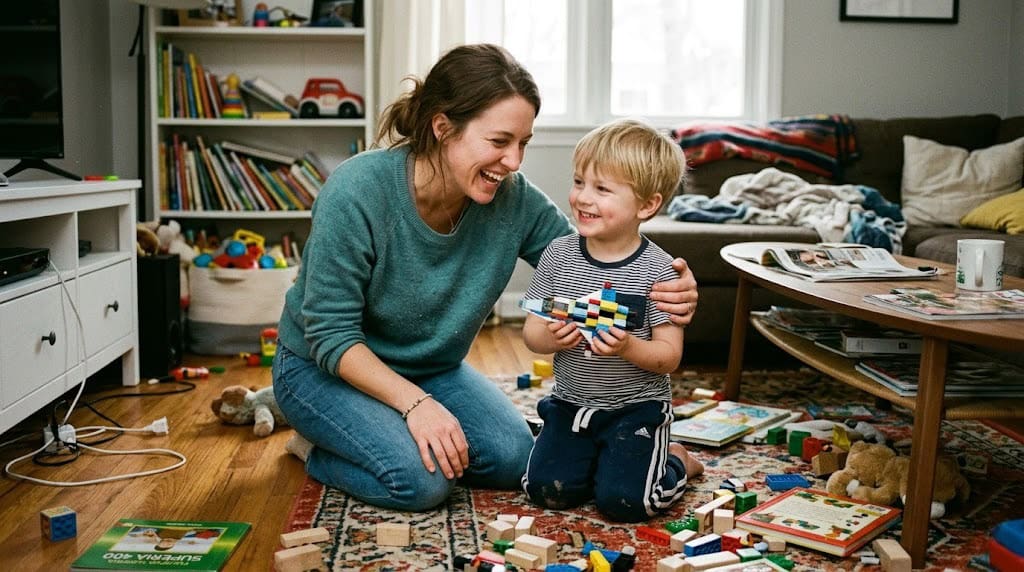
Parenting is full of moments that make you question yourself: “Why won’t my child listen?” or “How do I get them to do the right thing without constantly nagging?” The answer, backed by decades of research in psychology, might be simpler than you think: positive reinforcement.
Positive reinforcement is all about encouraging good behavior through rewards, praise, and support instead of focusing only on punishment. It’s not just a “nice idea”—it’s science. Understanding how it works can transform both your child’s behavior and your relationship with them.
What Positive Reinforcement Really Means
At its core, positive reinforcement is straightforward: when a child does something you want to see, respond in a way that makes it more likely they’ll do it again.
Think about it like this: if your child cleans up their toys and you smile, cheer, or give a small reward, their brain starts to link tidiness with positive feelings. Over time, picking up toys becomes a habit—not a chore.
Unlike punishment, which tries to stop bad behavior, positive reinforcement focuses on building the behaviors you want to see more often.
Why Rewards Work: The Brain Science Behind It
Ever wonder why kids light up at a sticker or a high-five? It’s all about dopamine, the brain’s “feel-good” chemical.
Here’s the breakdown:
- Your child does something positive.
- You respond with praise, a hug, or a reward.
- Dopamine floods the brain, creating a sense of pleasure.
- The child remembers the behavior and wants to do it again.
In other words, when you reinforce good behavior, you’re literally training the brain to recognize and repeat it.
Different Ways to Reinforce Good Behavior
Not all kids respond to the same things, so it’s helpful to mix up your approach:
1. Words That Stick
Instead of generic praise like “Good job!”, try being specific: “I love how you lined up all your blocks so carefully.” This shows that you notice their effort, not just the outcome.
2. Tangible Rewards
Stickers, small toys, or even extra playtime can work wonders, especially for younger children. The key is moderation—too many treats can dilute the lesson.
3. Experiences Over Things
For older kids, rewards can be special privileges or experiences, like a trip to the park, a movie night, or extra time on a hobby they love. These reinforce the idea that good behavior leads to meaningful, enjoyable experiences.
4. Connection Counts
Sometimes the most powerful reinforcement is emotional: a hug, high-five, or simply spending quality time together. Children crave connection, and social rewards help them feel valued.
Positive Reinforcement vs. Negative Consequences
Many parents default to punishment when kids misbehave. While scolding or time-outs may stop bad behavior in the short term, they don’t teach children why good behavior matters.
- Punishment: “Stop yelling!” → child obeys out of fear.
- Positive reinforcement: “I love how you used your calm words!” → child learns how to express themselves positively.
Punishment may also increase anxiety or resentment, while reinforcement fosters trust, confidence, and motivation.
Real-Life Examples
Let’s make this concrete.
Encouraging Reading
Scenario: Your 7-year-old struggles to finish their reading.
- Positive reinforcement: Celebrate each chapter finished with praise or a small reward. Make reading fun by letting them choose the next book.
- Outcome: Reading becomes associated with joy and achievement.
- Negative consequence approach: Removing screen time if they don’t read.
- Outcome: The child reads out of obligation, not curiosity, and may develop resentment toward reading.
Chores and Responsibility
Scenario: Your 10-year-old forgets to tidy their room.
- Positive reinforcement: Offer consistent praise or a small reward when they do clean up, focusing on effort rather than perfection.
- Outcome: They learn responsibility and feel proud of their accomplishment.
- Negative consequence approach: Scolding or taking away privileges.
- Outcome: The child may resist chores or hide messes, associating cleaning with punishment.
Timing and Consistency Matter
For positive reinforcement to stick:
- Act quickly: Reward behavior as soon as it happens.
- Be consistent: Reinforce behaviors regularly, not just occasionally.
- Gradually fade rewards: Over time, shift from tangible rewards to verbal praise and social reinforcement to build intrinsic motivation.
Tailoring Your Approach
Every child is unique. What motivates one may fall flat for another. Consider:
- Personality: Some kids thrive on praise, others on tangible rewards.
- Age: Younger children benefit from immediate, small rewards; older children can handle delayed or experiential reinforcement.
- Interests: Align rewards with your child’s passions to make them meaningful.
Avoiding Common Mistakes
Even the best-intentioned parents can slip up. Avoid these pitfalls:
- Over-rewarding, which can create entitlement
- Being inconsistent, which confuses expectations
- Using vague praise, which doesn’t reinforce specific behaviors
- Ignoring effort and focusing only on results
Celebrate progress, not perfection, and your child will internalize resilience and a growth mindset.
Positive Reinforcement With Natural Consequences
Positive reinforcement works best when combined with natural consequences:
- Forgot homework → receives a lower grade (natural consequence)
- Refuses to wear a coat → feels cold (natural consequence)
By reinforcing good behaviors and letting natural consequences play out, children learn responsibility while still feeling supported.
Research-Backed Benefits
Studies show children who experience consistent encouragement and reinforcement:
- Have higher self-esteem
- Develop better social skills
- Are more motivated in learning
- Build long-term habits of responsibility
It’s not just theory—it’s what works in real life.
Tips for Implementing Positive Reinforcement
- Set clear, achievable expectations.
- Catch your child “being good” instead of only correcting mistakes.
- Mix praise, tangible rewards, and experiences.
- Focus on effort, not perfection.
- Be patient and consistent—habits take time.
- Adjust strategies to fit your child’s personality and stage of development.
Final Thoughts
Positive reinforcement is more than a parenting strategy—it’s a way to nurture confidence, responsibility, and joy in learning. By focusing on encouragement rather than punishment, parents can transform behavior, strengthen relationships, and help children internalize positive habits that last a lifetime.
Remember, every smile, high-five, and word of praise isn’t just a reward—it’s a building block for your child’s future.